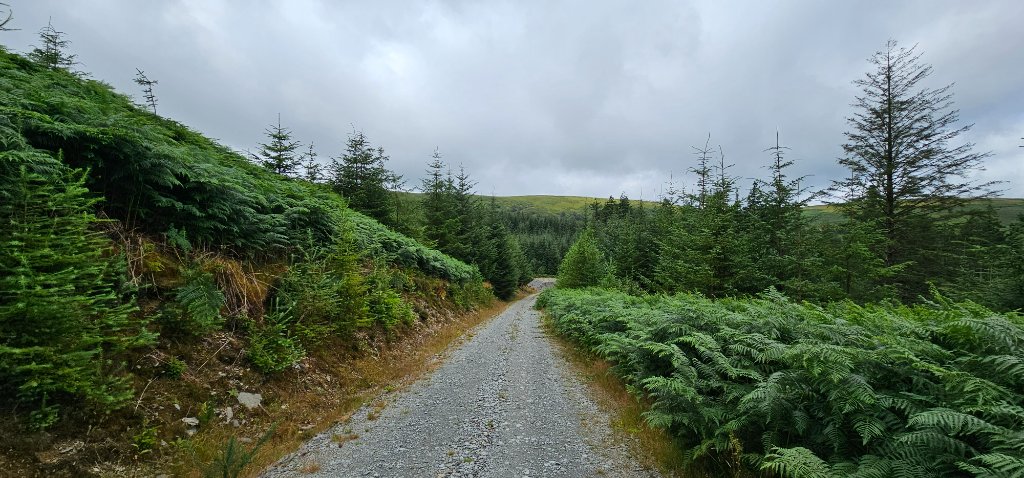
British mountain weather is notoriously unpredictable. A clear forecast in the nearest town tells you almost nothing about conditions on an exposed ridge or open moorland 600 metres up. Temperature can drop several degrees per 100m of ascent, wind speeds on summits are dramatically higher than in valleys, and cloud can descend in minutes. Always check a specialist mountain forecast — not a general weather app.
- MWIS (mwis.org.uk) — Mountain Weather Information Service. Specialist forecasts for 10 upland regions across the UK. The gold standard for mountain walkers.
- Met Office Mountain Forecast (weather.metoffice.gov.uk/specialist-forecasts/mountain) — detailed summit and ridge-level forecasts by region.
- Yr.no — Norwegian meteorological service, excellent for hourly precision at specific locations.
- Never rely on a town forecast for any walk above 300m. Conditions are completely different.
UK day hikes require a weather-first approach to packing. The golden rule is to layer — and always carry more than you think you'll need. Cotton kills in wet conditions; synthetic or merino wool base layers are non-negotiable.
- Waterproof jacket (taped seams, not just water-resistant)
- Waterproof over-trousers
- Merino wool or synthetic base layer — avoid cotton
- Mid-layer fleece or insulated jacket
- Warm hat and gloves (even in summer at altitude)
- Buff / neck gaiter
- Spare dry socks — always
- Sturdy hiking boots — broken in before you use them
- Good ankle support for uneven terrain
- Waterproof membrane (Gore-Tex or equivalent)
- Grippy Vibram-style sole for wet rock
- Gaiters for boggy moorland walks
- Trekking poles (optional but worth it on steep descents)
- OS Explorer map (1:25,000) for the area — physical copy
- Silva-style compass — know how to use it
- OS Maps app with offline map downloaded
- What3Words — save emergency location sharing
- Komoot or Garmin Connect for route planning
- Written note of your route and key waypoints
- Head torch (even on day walks — emergencies happen)
- Emergency foil survival blanket
- Whistle — 6 blasts is the mountain distress signal
- Small first aid kit (blister plasters especially)
- Fully charged smartphone
- Portable power bank
- Someone at home knows your route and ETA
- Minimum 2 litres of water for a day walk
- Water filter or purification tablets for longer routes
- High-energy snacks — nuts, cereal bars, dried fruit
- Packed lunch for routes over 3 hours
- Emergency snack reserve — always carry extra
- 20–30 litre pack for a full day walk
- Built-in rain cover or waterproof liner inside
- Hip belt for distributing weight on longer routes
- Osprey, Deuter or similar for comfort on steep terrain
- Keep weight under 10kg for a day hike where possible
Run through this before every walk. Tick each item as you pack it — the progress bar at the top of the page will track how ready you are.
In England and Wales the Countryside and Rights of Way (CROW) Act 2000 gives you the right to roam on open access land — mountains, moors, heaths and downs. This is not a right to walk anywhere — you must stick to public rights of way through farmland. Scotland's Land Reform Act 2003 is far more generous, giving a right of responsible access over almost all land.
The Elan Valley Estate has its own code of conduct — no swimming, canoeing or boating on the reservoirs, no overnight camping, no drones without permission, and all dogs on leads at all times. The valley is an active water catchment supplying millions of people, so these rules are taken seriously.
Hiking with a dog is one of life's great pleasures — as Trigger will attest. But it does require some extra thought, especially in the UK where livestock is everywhere and ground-nesting birds are protected by law.
- 01Lead near livestock: Always keep dogs on a lead when cattle, sheep or ground-nesting birds are present. A startled cow is genuinely dangerous. This is a legal requirement on some footpaths.
- 02Water: Carry enough water for your dog — don't let them drink from stagnant puddles or slow-moving water. Fast-flowing streams are usually fine.
- 03Paws: Check paws after walks on rocky or boggy terrain. Carry small dog boots or paw wax for very rough ground.
- 04Pack for the dog: Dog-specific first aid (tick removal tool essential), spare lead, collapsible water bowl, poo bags, high-value treats for recall.
- 05Ticks: Check your dog thoroughly after every walk in moorland or woodland. Use a tick removal tool — never squeeze or burn a tick off.
UK Mountain Rescue is operated by volunteers and is completely free — call 999 and ask for Police, then Mountain Rescue. Don't be embarrassed to call if you're genuinely in danger. They would rather come out than not.
- Call 999 — ask for Police, then Mountain Rescue
- Give your What3Words location if you have it
- Give your OS grid reference if you can read it from your map or app
- 6 whistle blasts = international mountain distress signal
- 3 whistle blasts = acknowledgement of a distress signal
- No signal? Text 999 — register first at emergencysms.net
Always tell someone your plan before you go — route, start point, expected finish time and who to call if you're overdue. A simple text to a friend or family member takes 30 seconds and can save your life.
After hundreds of miles on the trails of Wales, Kent and beyond — here's what I've learned the hard way.
- 01Break in your boots before a big day. New boots on a 10-mile walk is a recipe for blisters that'll put you off hiking for weeks. Wear them around the house, short walks, before anything serious.
- 02The waterproof goes on before you need it. Once you're soaked through, it's too late. If the clouds look threatening, put it on early — it's much easier to vent than to dry out.
- 03Download the map before you leave home. Mobile signal in the Elan Valley, the Brecons and most of the places worth visiting is non-existent. Offline maps are not optional.
- 04Know when to turn back. The mountain will always be there. The best view is the one you come home safely from. If conditions deteriorate or something feels wrong, there is no shame in turning around.
- 05Carry more food than you think you'll need. Hiking burns far more calories than you expect. A small extra bag of nuts or a chocolate bar at the bottom of your pack has saved many a grumpy last mile.
Leave every trail in better condition than you found it. Pick up any litter you pass — even if it isn't yours. Support local businesses at the trailhead. Respect the landscape and the communities who live in it. The hills are for everyone — let's keep them that way.